Monday, May 9, 2011

Soldier Boys (Book)

Author: Dean Hughes. Release date: 2001. Publisher: Simon Pulse. ISBN: 9780689860218.

File:Soldier Boys.jpgPlot summary: During the second world war, two farm boys, one from Utah the other from Germany, decide to the join the fight for their respective countries. Sixteen-year-old Spencer Morgan, a Mormon from Brigham City, Utah, drops out of school and trains to become a paratrooper, hoping to prove himself to his family and friends. Fifteen-year-old Dieter Hedrick is initially involved with the Hitler Youth, and his blind devotion to the dictator leads him to insist upon being sent into combat. Both Spencer and Dieter are enthusiastic about fighting for their country, not truly understanding the implications of war. Spencer’s eyes are opened when his best friend is killed, and an older soldier named Schaefer helps Dieter to see that murdering the enemy is nothing to revel in. Spencer and Dieter eventually meet during the Battle of the Bulge, and what happens proves that, even though they are enemies, soldiers in war have far more in common than they realize.

Review: This gripping novel tells the stories of two teenage boys fighting on opposite sides in WWII, who come to realize that a person’s humanity should never be lost in the ravages of war. Full of historical information and references, readers will learn a great deal about both sides of WWII in Soldier Boys, particularly the Hitler Youth program, the Battle of the Bulge, and the horrors of combat on the front. Both Spencer and Dieter are engaging characters who bring a unique voice to the events in the story. The relationship between Dieter and Schaefer is, at times, very touching, with the older soldier having a fatherly impact on fifteen-year-old Dieter. The conclusion of the novel is heart breaking, but also helps to drive home the point the novel ultimately presents: the terrible tragedy that is war itself. Tweens are certain to enjoy this novel, especially boys who are close in age to the main characters.

Genre: Historical Fiction

Reading level: Grades 6-9
Similar titles: A Boy at War: A Novel of Pearl Harbor by Harry Mazer, Heroes Don’t Run: A Novel of the Pacific War by Harry Mazer, Search and Destroy by Dean Hughes, Missing in Action by Dean Hughes.
Personal thoughts: I enjoyed this book, but also found it difficult to get through at times. The tragedy that is war is a common theme throughout the story and I couldn’t help but think of all the young men and women currently fighting in wars overseas who are likely experiencing situations similar to the characters in the novel. This made the story very sad for me, but I do hope that tween readers pick up on these concepts as well. Despite this overwhelming feeling of sadness, however, I found the novel to be very well written and an ideal pick for reluctant tween boys who don’t want to read anything “girlie.”

Themes: War, World War 2, death.

Awards/Reviews: New York Public Library Books for the Teen Age list, positive reviews from Publishers Weekly and School Library Journal.

Series Information: N/A

Character information:
Spencer Morgan – Sixteen-year-old Mormon boy from Brigham City, Utah. He drops out of school to become a paratrooper for the US military in hopes of defending his country during WW2.
Dieter Hedrick – Fifteen-year-old German soldier and former member of the Hitler Youth program. He is very dedicated to Hitler and cannot wait to begin fighting on the front.
Schaefer – An older soldier who befriends Dieter. He is weary of war and convinces Dieter that killing the enemy is not something to celebrate.
Ted Draney – Fellow paratrooper and friend of Spencer’s.

Annotation: War is supposed to tear two sides apart, but American soldier Spencer and German soldier Dieter find that, even though they are enemies, they have more in common than they realize.


Fever, 1793 (Book)

Author: Laurie Halse Anderson. Release date: 2000. Publisher: Simon & Schuster. ISBN: 9780689838583.
File:Fever 1793.jpg
Plot summary: Fourteen-year-old Matilda “Mattie” Cook lives with her mother, Lucille, and her grandfather in 1793 Philadelphia. The family resides above a coffeehouse that Matilda helps to run, along with the coffeehouse cook, a free African-American woman named Eliza. Mattie lives the life of a typical teenager: she often argues with her mother, she daydreams, and she has a crush on a handsome painter’s apprentice named Nathaniel Benson. Things change, however, when, Polly, the server at the coffeehouse, does not come to work. Mattie learns that Polly has come down with yellow fever, and is shocked when Polly quickly dies. Mattie becomes more and more frightened as her neighbors and friends catch the fever. When her mother shows signs of having it, Mattie is sent with her grandfather to stay in the country where she is less likely to fall ill. As she and her grandfather are leaving the city, however, they are mistaken by the town guards as already being infected with the fever. The two are forced to remain in Philadelphia, and soon Mattie finds that she has contracted the illness. As Mattie fights to survive, she must cope with the impact of the epidemic on her life and how things will never be the same.

Review: This tale based on the real yellow fever epidemic of 1793 is heartbreaking but inspiring as well. Anderson’s descriptions of the city of Philadelphia in the grips of the epidemic are very realistic and set the tone perfectly for Mattie’s story. While the character of Mattie is fictional, it is likely that someone very much just like her did exist in the summer of 1793, and tweens will appreciate being put in the shoes of someone who survived a horrible epidemic. The transition from Mattie’s life before the epidemic and her existence after are stark. Many readers will be able to identify with some of what Mattie is growing through: the death of her father, arguing with her single mother, longing for the handsome and kind Nathaniel. In many ways, Mattie is a typical teenage girl which makes what she must cope with after the epidemic takes hold all the more harrowing. Readers will learn quite a bit about the yellow fever epidemic as well as the city of Philadelphia in colonial times. The research Anderson put in to composing the story is evident, and serves to create an entertaining story hidden within a history lesson. Overall, Fever, 1793 is a very engaging novel for tweens.

Genre: Historical Fiction

Reading level: Grades 5-9
Similar titles: N/A
Personal thoughts: As a history buff, I really enjoyed Fever, 1793. I don’t think that it’s a book for everyone, many tweens might find it a bit too historical or descriptive, but it is certain to be enjoyable for quite a few readers as well. I really enjoyed the juxtaposition of Mattie’s life pre- and post-epidemic, especially because epidemics still occur today. This book definitely has classroom applications, and I would also recommend it for tweens interested in historical fiction.

Themes: Yellow fever, Philadelphia, colonial times, single parents, coping with illness and loss.

Awards/Reviews: Positive reviews from Publishers Weekly, School Library Journal, Booklist, New York Times Book Review and VOYA.

Series Information:
N/A


Character information:

Matilda “Mattie” Cook – Fourteen-year-old living in 1793 Philadelphia. She lives with her mother, whom she often argues with, and her grandfather. When friends and neighbors become ill with the yellow fever, her mother sends her away to the country to avoid getting sick.

Captain William Farnsworth Cook – Mattie’s grandfather and a former military man. He accompanies Mattie as she flees the city to avoid catching the fever.

Lucille Cook  - Mattie’s mother who was widowed after Mattie’s father died suddenly. She eventually becomes ill with the yellow fever and sends Mattie away.

Nathaniel Benson – A kind and handsome painter’s apprentice that Mattie admires quite a bit.

Eliza – A free African-American woman who is the cook at the coffeehouse where Mattie works. She is one of Mattie’s best friends.

Annotation: Fourteen-year-old Mattie’s life will never be the same when her town, Philadelphia, falls into the grips of the yellow fever epidemic of 1793.

The Boggart (Book)

Author: Susan Cooper. Release date: 1993. Publisher: Macmillan. ISBN: 9780756939328.

Plot summary: When the Volniks inherit an old castle on an island off the coast of Scotland they decide to visit to see if there’s anything useful that they can send to their home in Toronto, Canada. After returning home they discover that they took more than a few pieces of furniture from Scotland: an old, mischievous spirit called a boggart was living in the castle, and was transported in an old desk to the Volniks’ home! Strange things begin happening and twelve-year-old Emily Volnik and her ten-year-old brother Jessup are getting the blame. How can they convince their parents that they didn’t cause furniture to fly through the air or for a bucket of water to drench their mother? Apparently the boggart loves nothing more than to play pranks on the humans around him, and he’s loving all the modern technology at his hands, especially electricity. At first, Emily and Jessup aren’t sure what to make of the strange spirit, but when one his practical jokes lands Emily in the hospital, it’s clear that he belongs back home in Scotland. Will Emily and Jessup be able to return the boggart to the old castle, or is he stuck in Toronto forever?

Review: This fun and clever story breezily combines slapstick humor with English folklore for a unique tale that is sure to delight readers. Tweens may not be familiar with a boggart, a spirit similar to a poltergeist but less sinister, and will enjoy his goofy antics. Towards the middle of the story, the boggart actually becomes quite a likable character, even if he makes mistakes here and there. One of the darker parts of the story is a psychologist named Dr. Stigmore. Dr. Stigmore believes that Emily is manifesting the paranormal activities and believes she should be placed in a mental institution. Tweens will pick up on this nod to the over-medication of children that perpetuates society, as well as stifling the imaginary beings that often accompany childhood. The mood of the story is very light, however, despite these more subtle themes. Overall a charming novel with a lesson in folklore mixed in.

Genre: Fiction/Fantasy

Reading level: Grades 4-7
Similar titles: The Borrowers by Mary Norton.
Personal thoughts: I love stories that combine folkloric elements with a modern plot, so The Boggart was right up my alley! Prior to reading the novel, I had never heard of a boggart, but did quite a bit of research into the concept afterwards. I wouldn’t be surprised if the story sparked a similar interest in tweens, making this title an excellent way to start a discussion about English fairy tales, or other creatures from different cultures.

Themes: Spirits, Scotland, poltergeists, mental health.

Awards/Reviews: Young Reader’s Choice Award nominee, positive reviews from Publishers Weekly and School Library Journal.

Series Information: The Boggart has a sequel, The Boggart and the Monster, published in 1997 by Susan Cooper.

Character information:

Emily Volnik – Twelve-year-old girl from Toronto, Canada. She is blamed for many of the pranks pulled by the boggart and, eventually, a psychologist, Dr. Stigmore, thinks she should be institutionalized.

Jessup Volnik – Ten-year-old genius brother of Emily. He is a computer programmer and these skills eventually come in handy when dealing with the boggart.

Maggie Volnik – Mother of Emily and Jessup who blames the activities of the boggart on her children.

Robert Volnik – Father of Emily and Jessup who also blames his children for the activities of the boggart, but is not as apt to want Emily institutionalized as her mother.

Tommy Cameron – Thirteen-year-old resident of the Scottish island where the boggart was living. At first he doesn’t tell Emily and Jessup about the boggart, but eventually he helps them.

Dr. William Stigmore – A cruel parapsychologist who believes Emily is manifesting her teenage angst in the form of a poltergeist that is responsible for the boggart’s activities.


Annotation: What’s more strange: inheriting an old Scottish castle inhabited by a mischievous spirit called a boggart or accidentally bringing that spirit home with you? Emily and Jessup Volnik are about to find out what happens when an ancient spirit meets a modern city.  

Scary Stories to Tell in the Dark (Book)

Author: Alvin Schwartz. Illustrator: Brett Helquist. Release date: 1981. Publisher: HarperCollins. ISBN: 97800060835200.

Plot summary: This collection of short stories has been delighting, and scaring, readers, for thirty years. Stories include “The Big Toe,” a tale about a little boy who discovers a toe sticking out of the ground in his garden, “The Haunted House,” a story about the ghost of a murdered woman who wants to avenge her death, and “The White Sating Evening Gown,” the story of a mother who rents a used dress from a thrift shop for her daughter’s dance, a dress used by a corpse. The book contains five chapters that divide the stories, but they do not have to be read in order. Included in the book are instructions for a game called “The Dead Man’s Brains” as well.

Review: Scary Stories to Tell in the Dark is a truly frightening, but fun, collection of short stories that tweens are sure to love. Published thirty years ago, generations of young readers have been enjoying these bone-chilling tales. Some of the stories are darker than others, but none are too scary, graphic or violent for tweens. The collection, as well as the other titles in the series, was listed by ALA as the most challenged books from 1990-1999, and continues to be challenged, though not as frequently today. Although some of the illustrations are frightening or surreal, there is nothing truly sinister that a quick chat with a parent wouldn’t take care of for younger tweens.

Genre: Short stories/ Horror

Reading level: Grades 4-8

Similar titles: Other titles in Scary Stories series by Schwartz, Favorite Scary Stories of American Children by Richard Young and Judy Dockrey Young, 13 Scary Ghost Stories by Marianne Carus.

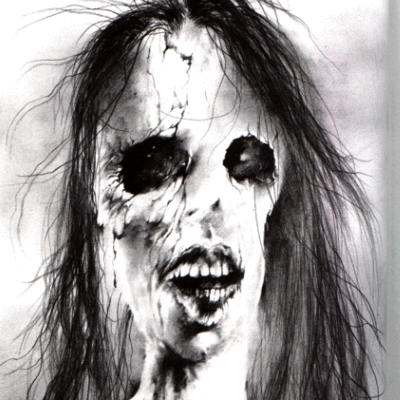
I had to add this picture.
This was really the only thing in the
book that I had trouble with as
a tween. She really scared me!
Personal thoughts: I absolutely loved this book as a tween, and even earlier! I remember reading these stories with my two older sisters and being scared, but not to the point that it kept me up at night. I like how Schwartz created a chilling set of stories that is still appropriate for younger readers. I’m not surprised that they have been challenged so frequently, but I believe that they are appropriate for tweens. I saw no ill effects in myself after reading them, in fact, they inspired me to write my own short stories!

Themes:. Scary stories, ghosts, monsters.

Awards/Reviews: Grand Canyon Reader Award winner, considered classic work of children’s literature.

Series Information: Book one in Scary Stories series by Alvin Schwartz.

Character information: N/A

Annotation: Prepare to be scared in this bone-chilling collection of short stories that are sure to make you tremble!


Tuck Everlasting (Book)

Author: Natalie Babbitt. Release date: 1975. Publisher: Farrar, Straus and Giroux. ISBN: 9780312369811.

Plot summary: Ten-year-old Winnie Foster lives a very sheltered life in her family’s home where she is kept behind a fence that surrounds the property. One day, Winnie decides she’s had enough of her life and runs away into the neighboring woods. While in the woods, Winnie happens upon a teenage boy who is drinking water from a spring pouring from a tree. Winnie learns that this boy is Jesse Tuck, the youngest son of the Tuck family who, along with the rest of the Tuck family, have discovered the secret of this spring: it makes whoever drinks the water immortal. When Winnie learns their secret, the Tuck family decides to take Winnie to their home to live in order to keep the truth about the spring safe. Winnie and the Tucks don’t realize that someone has been watching them in the woods: a mysterious man in a yellow suit who wants to use the spring to get rich. After Winnie goes to live with the Tucks, she learns that life doesn’t have to be as structured as it was behind the walls of her parents’ home. But will the love she has for the unusual family be ruined by the schemes of the man in the yellow suit?

Review: This sweet and magical tale combines adventure, romance, love, and immortality to create a timeless story. The novel is set in the year 1880 initially giving it a historical fiction feel. The novel is far from this genre, however, and is more along the lines of a fantasy story or fairytale. Tweens will be surprised to learn the secret of the Tuck family, and this “twist” will likely entice them to plow through the rest of the novel. The theme of immortality and what it means to live forever is very interesting and unique in literature for this age group. Despite the plot line of the man in the yellow suit trying to use the spring water to get rich, the real question presented in Tuck Everlasting is whether it is good to live forever, or if mortality has its merits. This question will likely resonate with many tweens who are beginning to think about complex ideas like death and their own mortality. The romance between Winnie and Jesse provides a nice antithesis to the more deep questions in the novel. Overall, Tuck Everlasting is a magical story that has been beloved by readers over the years, and will likely continue in this same vein.

Genre: Fiction/Fantasy

Reading level: Grades 4-7

Similar titles: Bridge to Terabithia by Katherine Paterson.

Personal thoughts: I really enjoyed this novel and was surprised by the complexity of some of the themes and questions the plot raises. The man in the yellow suit part of the story was, to me, secondary to the question of the merits of immortality. I think this story would make a great classroom read-aloud.

Themes:. Immortality, change, nature, greed.

Awards/Reviews: ALA Notable Book, Horn Book Magazine Fanfare List, Janusz Korczak Medal Winner, Christoper Award for Best Book for Young People Winner, positive reviews from Booklist and The New York Times Book Review.

Series Information: N/A

Character information:

Winnie Foster – Ten-year-old girl who lives a very sheltered life with her parents. After running away into the woods surrounding her home, she meets the Tuck family and learns that they have discovered a spring that makes them immortal.

Jesse Tuck – Appears to be seventeen-years-old, but is actually much older. Youngest son of the Tuck family, he is immortal from drinking the spring water. He develops a romance with Winnie.

Mae Tuck – Mother of the Tuck family, and also immortal. She is very kind and loving.

Angus Tuck – Father of the Tuck family, and also immortal. He is very concerned with keeping knowledge of the spring a secret.

Miles Tuck – Oldest son of the Tuck family, who appears to be in his early twenties.

Man in the Yellow Suit – Cruel man who wants to exploit the powers of the spring to make money.

Annotation: Winnie lives a sheltered and boring life behind the walls of her parent’s home, cut off from the rest of the world. One day she decides to run away, and happens upon the Tuck family who live in the woods nearby. The Tuck family is different from other families, however: they have discovered a spring that makes those who drink from it immortal.

Sunday, May 8, 2011

The Reptile Room (Book)

Author: Lemony Snicket. Illustrator: Brett Helquist. Release date: 1999. Publisher:  HarperCollins. ISBN: 9780064407675.
File:The Reptile Room USA.PNGPlot summary: In this second installment of Lemony Snicket’s series, the Baudelaire children have been saved from their evil cousin, Count Olaf, and are now living with another distant relative, Dr. Montgomery Montgomery. Dr. Montgomery, or “Uncle Monty,” is a kind man with a bit of a reptile obsession. He introduces the children to his new assistant, Stephano, who will help him with his new discovery, the Incredibly Deadly Viper. The Baudelaire children quickly realize that Stephano is actually Count Olaf in disguise and try to warn their Uncle Monty, who doesn’t believe them. Will the Baudelaire children be able to escape Count Olaf again, or has their luck run out?
Review:  Continuing in the same dark but fun tone as the first novel, The Reptile Room continues Lemony Snicket’s popular series. The story picks up where the first left off with the Baudelaire children experiencing a bit of good fortune while living with their kind but eccentric uncle, Dr. Montgomery Montgomery. Readers will likely pick up on the fact, however, that things are never going to go well for the Baudelaires, and the fate of their uncle won’t be a surprise. Count Olaf’s disguising himself as Stephano proves to be an entertaining plot twist, as does the Incredibly Deadly Viper. Tweens who enjoyed the first installment in the series will also enjoy this sequel, and want to continue on to the third title.
Genre: Fiction
Reading level: Grades 4-7
Similar titles: Other titles by Lemony Snicket.
Personal thoughts: I was a bit apprehensive before picking up this title, as I have often been disappointed with sequels to novels that I enjoyed. In this case, I was very pleased with what Lemony Snicket created next for the Baudelaires. I think that tweens will enjoy this book as much as the first, and want to continue on in the series.
Themes:  Orphans, danger, reptiles.
Awards/Reviews:  Part of popular series.
Series Information: Book two in the Series of Unfortunate Events books by Lemony Snicket.
Character information:
Violet Baudelaire – Fourteen-years-old and oldest of the Baudelaire orphans. She is smart and an inventor. While living with her Uncle Monty she is asked to invent snake traps for a Peruvian expedition.
Klaus Baudelaire – Twelve-year-old middle child of the Baudelaire children. He is a bookworm who helps his Uncle Monty by reading books about snakes.
Sunny Baudelaire – Infant and youngest of the Baudelaire children. She has very sharp teeth and uses them to bite rope for Uncle Monty.
Count Olaf/Stephano – Evil cousin of the Baudelaire children. He disguises himself as Uncle Monty’s assistant in order to capture the Baudelaires and get their fortune.
Dr. Montgomery Montgomery or Uncle Monty – Kind guardian of the Baudelaires. He is a herpetologist and plans to take the children with him on an expedition to Peru.  
Annotation:   They escaped the clutches of their evil cousin, Count Olaf, and now the Baudelaire children are living with their kind distant uncle, a herpetologist named Dr. Montgomery Montgomery. But when Uncle Monty suddenly gets a new assistant, Stephano, could it be Count Olaf in disguise?

Saturday, May 7, 2011

The Bad Beginning (Book)

Author: Lemony Snicket. Illustrator: Brett Helquist. Release date: 1999. Publisher:  HarperCollins. ISBN: 9780064407667.
Plot summary: True to it’s title, The Bad Beginning chronicles the very unfortunate circumstances that cause fourteen-year-old Violet, twelve-year-old Klaus and infant Sunny Baudelaire to be orphaned. After their parents are killed in a fire, the children are sent to live with their distant cousin, Count Olaf, a professional actor. Soon the children learn that Olaf is a cruel man who is only after what he assumes is a very large inheritance following the death of their parents. Olaf treats the Baudelaire children like slaves, and only their kind neighbor, Judge Strauss, makes their lives bearable. When Olaf asks the children to participate in an upcoming stage performance called “The Marvelous Marriage,” they begin to wonder if it is simply a trick to get Violet to actually marry him, thus inheriting the money. Can the Baudelaire children figure out a way to outsmart Olaf?
Review:  Lemony Snicket’s now prolific Series of Unfortunate Events books begin with this dark but fun novel. From the start, it is clear that Snicket’s writing style is quirky. He warns the reader that they will not enjoy the story and that it is full of sadness. These tricks, however, only serve to entice the reader to continue, making this title ideal for reluctant tween readers who might need a little “shove” to dive into a chapter book. The story of the orphaned children who are forced to live with a mean relative isn’t new, but Snicket’s dark humor makes The Bad Beginning unique. The adults the Baudelaire children encounter seem to be either sinister or incompetent with the exception of the kind Judge Strauss. The end of the novel leaves the story wide open for all of the sequels that follow, and tweens will certainly want to pick up the next title after they finish this one.
Genre: Fiction
Reading level: Grades 4-7
Similar titles: Other titles by Lemony Snicket, James and the Giant Peach by Roald Dahl.
Personal thoughts: I have always been a big fan of this series mainly because I know that it gets checked out and read quite frequently by tweens at my library. I have also been curious about what it is about the books that entice children to keep picking up the books, so I was delighted to experience the first story. I found it very entertaining and clever, and completely understand its popularity. I commend Lemony Snicket for creating something that can be enjoyed by reluctant readers.
Themes:  Orphans, tragedy, sinister plots, dark humor.
Awards/Reviews:  Positive reviews from Publishers Weekly, Library Journal and Kirkus Reviews.
Series Information: Book one in the Series of Unfortunate Events books by Lemony Snicket.
Character information:
Violet Baudelaire – Fourteen-years-old and oldest of the Baudelaire orphans. She is smart and an inventor, but struggles while living with her evil cousin, Count Olaf.
Klaus Baudelaire – Twelve-year-old middle child of the Baudelaire children. He’s also smart and a bit of a bookworm.
Sunny Baudelaire – Infant and youngest of the Baudelaire children. She has very sharp teeth and can perform many tasks that are unusual for a baby.
Count Olaf – Distant cousin to the Baudelaire children and professional actor. He is a very cruel man who is intent on getting a hold of the Baudelaire inheritance.
Judge Strauss – Kind neighbor of Count Olaf who helps the Baudelaire children.
Annotation:  After their parents are killed in a fire, the three Baudelaire children must try to survive at the hands of their distant cousin, and new cousin, the evil Count Olaf.